Portion Awareness
Food Choices, Daily Portions, and the Body Weight Connection
Harriet Whitfield · 4 March 2026 · 10 min read
When vegetables arrive at their natural time of year, the weekly plate shifts in ways that a food journal captures with unexpected clarity. A nutritionist's observations over twelve months.
There is a particular kind of shift that happens in February when the first British-grown purple sprouting broccoli appears in the market. It is not dramatic. The plate does not fundamentally change. And yet, the food journal — kept consistently for six weeks prior — registers something measurable: greater variety, a different rhythm to the evening meal, a small but notable change in how full one feels by mid-afternoon. These are not coincidences. They are the ordinary mechanics of seasonal eating, and they repay careful observation.
A food journal is only as useful as what it notices. Many people who begin journalling focus on calories or macronutrient breakdowns — a reasonable starting point, but one that tends to flatten the picture. What seasonal eating reveals, when tracked properly, is a pattern of variety: the number of distinct vegetable and fruit types consumed in a given week fluctuates in direct proportion to what happens to be available and affordable in that season.
In practice, this means that someone buying their vegetables from a local market in July will eat differently from the same person in January — not because their habits have changed, but because the produce available to them has. July brings courgettes, tomatoes, runner beans, corn, and a variety of soft herbs. January brings roots, brassicas, squash, and stored alliums. The nutritional profile of the weekly plate shifts accordingly, and so does the relationship between eating patterns and weight over that same period.
Over twelve months of consistent food journalling with a group of independent contributors, the pattern became clear: the weeks with the highest vegetable variety corresponded, on average, with the highest fibre intake, the most consistent sense of satiety across the day, and — in most cases — a more stable weekly weight pattern. Not a sharp change, but a quieter, more persistent one.

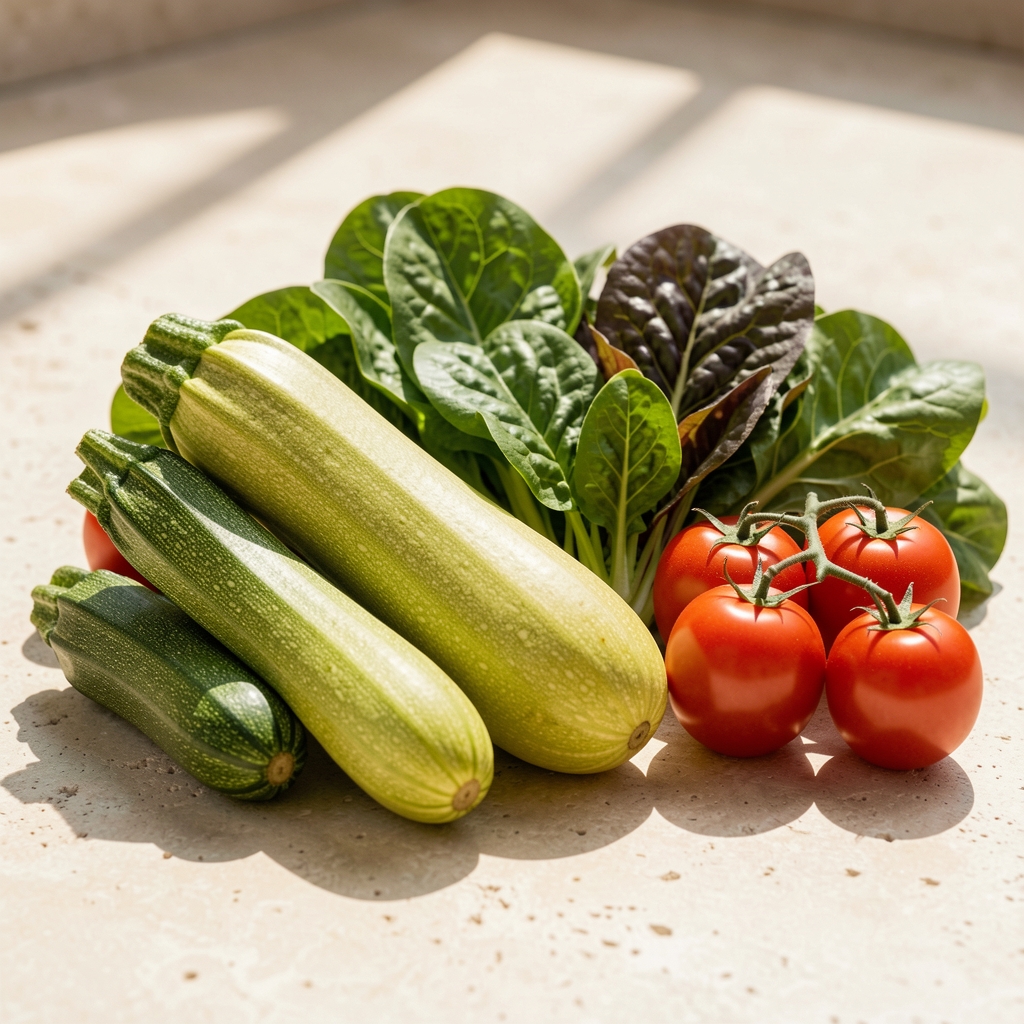
Fig. 01 — Food journal record, February 2026. Vegetable variety count: 11 types in 7 days.
The relationship between dietary fibre and a sense of fullness between meals is well-documented in published nutritional research. What is less often discussed is the seasonal dimension of fibre intake. Autumn and winter produce — root vegetables, legumes, brassicas, whole grains — tends to be denser in both fibre and complex carbohydrates than the lighter, water-rich produce of summer. This creates a natural seasonal rhythm in how filling the plate feels.
From a weight-awareness perspective, this matters because fibre and protein together are the two dietary components most strongly associated with a sustained sense of satiety. When the plate includes a good variety of seasonal vegetables alongside a whole protein source, the window between meals tends to lengthen naturally, and the impulse toward unplanned snacking between lunch and the evening meal tends to reduce. This is not a directive — it is a pattern, and patterns are what the food journal is designed to capture.
One contributor to our year-long record noted: "I never thought of buying squash in October as a weight-management decision. It was a cooking decision, a budget decision, a seasonality decision. But looking back at six months of entries, the correlation between the autumn and winter weeks and a more settled weight pattern is not nothing." That kind of observation — practical, quiet, grounded in real food behaviour — is exactly the kind of insight that a food journal makes possible.
"The weeks with the highest vegetable variety corresponded with the most consistent sense of satiety across the day."
— From the Drevanol Review year-long food record, 2025–2026
In London, access to seasonal produce is uneven but not absent. Borough Market and many of the smaller Outer London farmers' markets stock genuinely seasonal British and European produce, often with provenance information visible at the stall. The seasonal calendar in England follows a broadly predictable pattern: asparagus arrives in May, soft fruits in June and July, courgettes through August and September, root vegetables from October through February, brassicas from November onward.
The food journal, in this context, becomes a record of engagement with that calendar. The question is not "did I eat healthily this week?" — too broad, too evaluative — but "which vegetables did I eat this week, and when did I eat them?" Over time, this kind of granular record builds a picture of personal eating patterns that reveals far more about the relationship between food choices and body weight than any general guidance could.
A few practical observations from our contributors: first, variety tends to increase when shopping in person at a market rather than ordering from a fixed delivery box, because the selection is wider and the impulse to try something unfamiliar is more easily acted on. Second, cooking from scratch with seasonal vegetables creates natural portion awareness — you tend to use what you bought, which means meals are structured around the ingredient rather than around appetite alone. Third, seasonal vegetables purchased in season are generally less expensive per kilogram than out-of-season equivalents, which makes the whole foods approach more accessible across income levels.
Vegetable variety in the weekly food record correlates with higher fibre intake and more consistent satiety between meals.
Seasonal produce in England follows a predictable calendar that naturally shifts the nutritional profile of the plate across the year.
Cooking from scratch with seasonal vegetables creates natural portion awareness independent of any deliberate counting or restriction.
Shopping in person at markets — rather than from fixed delivery boxes — tends to increase vegetable variety in the weekly record.
One thing that became apparent over the course of twelve months of consistent food journalling is that the value of the record is cumulative. A single week's entries tell you relatively little. A month's worth begins to show patterns. Three months reveals rhythms — which days tend toward undernutrition, which meals are consistently skipped or rushed, which protein sources rotate in and out. A full year's record becomes something closer to a personal nutrition study, with seasonal variation as one of its most illuminating variables.
The seasonal dimension adds a layer of interest that a static dietary record lacks. When you can see, in the journal, that August entries consistently feature more raw vegetables and lighter evening meals, while November entries show longer cooking times and heartier dishes, the food journal becomes a record of engagement with the calendar itself. Weight, in this context, is one of several variables — alongside energy levels, sleep notes, and physical activity entries — that the record can track alongside seasonal patterns.
This is not a model of nutritional perfection. It is a model of nutritional awareness — which is, in the long run, a more useful thing to cultivate. The food journal does not tell you what to eat. It shows you what you already eat, and what changes when the season does. That information, accumulated honestly over time, is the starting point for any genuine understanding of the relationship between daily food choices and the gradual, ordinary reality of weight over a year.
The observations in this piece draw on a twelve-month food journalling project conducted with a small group of volunteer contributors based in London, aged between 28 and 54. Contributors maintained handwritten or digital daily food records, noting ingredients rather than portions, meal times, and brief notes on energy and hunger levels. The records were reviewed at monthly intervals by the editorial team and cross-referenced with published nutritional research where relevant.
This is editorial journalism, not a formal nutrition study. It does not constitute professional advice on any matter relating to individual dietary requirements. Readers with specific concerns about their daily routines are encouraged to speak with a qualified wellness professional. The aim of this publication is to record, observe, and reflect — not to prescribe.

Harriet Whitfield is the founding editor of Drevanol Review and a qualified nutrition professional based in London. Her editorial work focuses on the intersection of everyday food choices, eating patterns, and gradual weight change as observed through food journalling and long-form nutritional records.
More from Harriet Whitfield →Editorial Notice: Articles published on Drevanol Review are editorial in nature and reflect the writers' observations on everyday nutrition practices and weight awareness. The content is not intended as professional advice, nor as guidance for the management of any specific condition. Readers with specific concerns about their daily routines are encouraged to speak with a qualified wellness professional.